
Portfolio Tracking Is Not Risk Assessment: A DeFi Framework for Using Rabby Wallet More Intelligently
What if the most dangerous number in a DeFi portfolio is the one that looks most precise? A dashboard may show token balances, dollar values, and daily performance, yet still conceal the risks that determine whether those figures can be realized. In decentralized finance, portfolio tracking is largely an exercise in observation. Risk assessment is an exercise in understanding mechanisms: smart-contract permissions, liquidity, bridge dependencies, oracle design, leverage, and the possibility that a transaction will do something different from what the user intended.
That distinction matters for US-based users managing assets across Ethereum and other EVM networks. A wallet can help organize a complicated on-chain environment, but it cannot turn uncertain markets or imperfect protocols into safe ones. The more useful question is therefore not simply, “How much is my portfolio worth?” It is, “What must remain true for this portfolio to retain that value and remain controllable?”
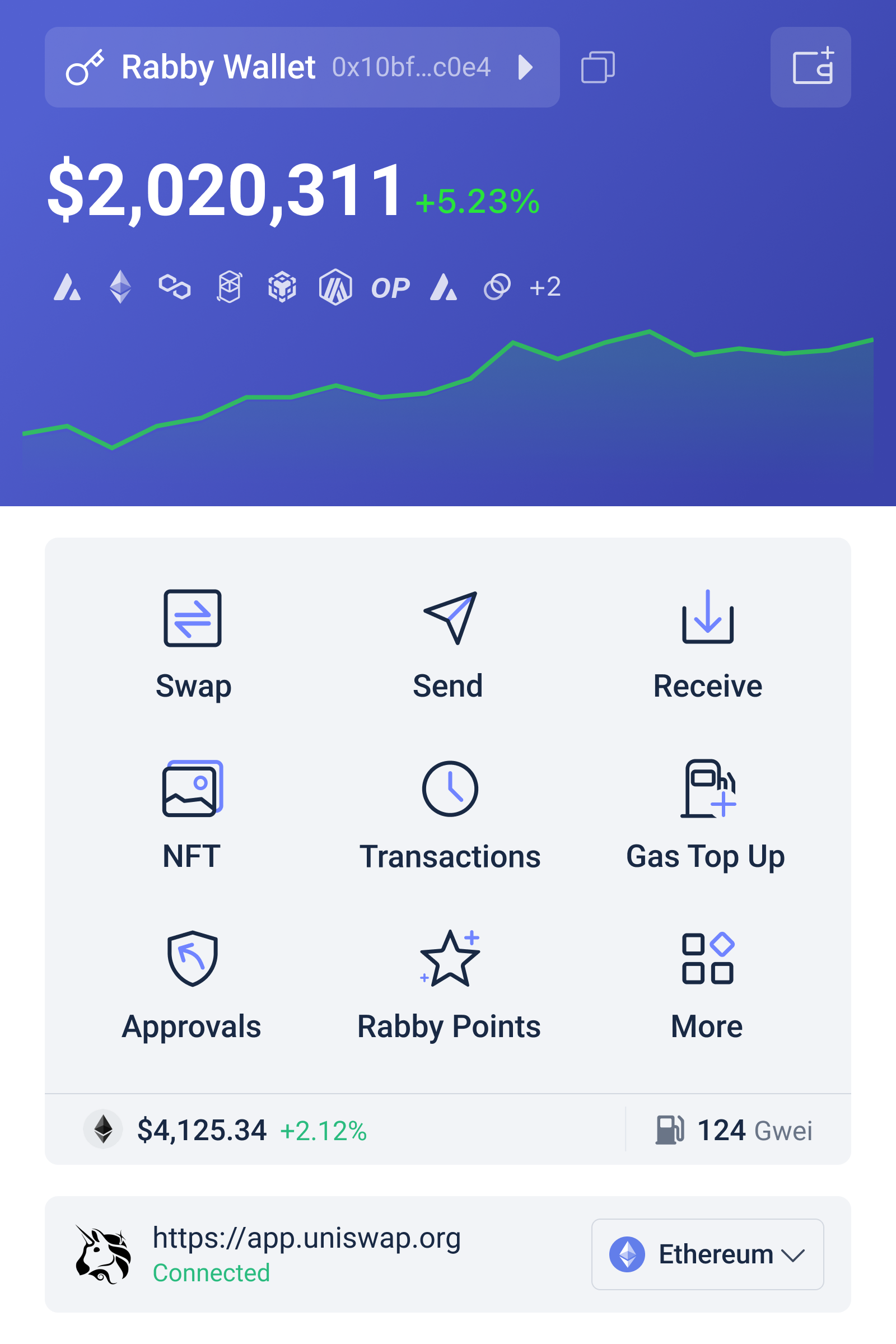
The portfolio is a system of dependencies, not a list of tokens
Traditional portfolio tracking often begins with asset allocation: stocks, bonds, cash, and perhaps a few alternative investments. DeFi portfolios are more conditional. A token balance may depend on a lending market remaining solvent, a stablecoin maintaining its design objective, a bridge continuing to process messages correctly, or a decentralized exchange retaining enough liquidity to support an exit.
This creates a useful mental model: every position has both an asset layer and a dependency layer. The asset layer answers what is held. The dependency layer asks how the position is produced, priced, redeemed, transferred, and controlled. A liquid staking token, for example, is not merely a token with a market price. Its practical risk may include validator operations, redemption conditions, liquidity depth, smart-contract logic, and the behavior of the market in a stressed period.
Portfolio trackers are good at aggregating the visible layer. They can help users identify concentration, compare balances across chains, and notice that an apparently diversified portfolio is actually dominated by one stablecoin, one protocol, or one correlated type of collateral. That is valuable. But aggregation can also create false comfort if every position is treated as an independent line item with a reliable price.
The first analytical improvement is to track exposure by source of risk, not only by ticker symbol. Two different tokens may share the same bridge, oracle, collateral asset, or governance dependency. Conversely, two assets with similar names may have materially different redemption and custody structures. A portfolio that appears diversified by token count may be concentrated by mechanism.
What transaction simulation adds—and what it cannot prove
Transaction simulation is best understood as a pre-execution inspection tool. Before signing, a wallet may attempt to model the transaction’s likely effects: which assets leave the account, which assets arrive, what approvals are created, and whether a contract call appears likely to fail. This changes the security workflow from blind authorization to informed review.
That shift is important because many Web3 losses begin with a mismatch between the user’s mental model and the transaction’s actual permissions. A user may think they are swapping one token for another while the transaction also grants a spending allowance, interacts with an unexpected contract, or routes through a more complex sequence than the interface suggests. A clear simulation can expose suspicious recipients, unusual token movements, or an outcome that conflicts with the intended action.
For users evaluating an rabby wallet as part of a broader DeFi workflow, simulation and risk warnings are most useful when treated as evidence rather than verdicts. They can improve visibility into a proposed action, but they do not establish that the contract is honest, economically sound, or immune to future changes. A simulation may represent the transaction against current state; markets can move, liquidity can disappear, and a protocol can contain logic that is difficult to infer from one call.
This is the central limitation: transaction safety is partly a state-estimation problem. The wallet can inspect the proposed interaction, but the result depends on the chain state, the contract, the route, the user’s permissions, and the assumptions built into the simulation. A warning is not proof of fraud, and the absence of a warning is not proof of safety. The right response to an alert is investigation, not automatic panic; the right response to a clean result is disciplined confirmation, not automatic trust.
Three ways to track a DeFi portfolio—and what each sacrifices
Wallet-native tracking
Wallet-native tracking is usually the most convenient starting point. It keeps balances and transaction decisions close together, which reduces the chance that a user reviews a portfolio in one application and signs a transaction in another without connecting the two contexts. For active users, that continuity is a practical security advantage.
The trade-off is analytical depth. A wallet view may not fully explain historical cost basis, taxable events, realized versus unrealized gains, or the economic exposure embedded in complex positions. It is strongest for current state and immediate action, not necessarily for long-term accounting or institutional reporting.
Dedicated portfolio trackers
Specialized trackers can offer better historical analysis, cross-wallet aggregation, performance attribution, and tax-oriented records. For a US user, that distinction can matter because swaps, liquidity provision, rewards, and transfers may have different reporting implications depending on the facts and the applicable interpretation. A tracker may help reconstruct activity, but users should not confuse software categorization with professional tax advice.
The cost is fragmentation. A third-party tracker may rely on address labels, indexing assumptions, or price data that are incomplete. It may also introduce another data-sharing relationship and another interface that the user must understand. Better charts do not necessarily mean better security.
Manual or spreadsheet-based review
Manual review is slower, but it can reveal what automated dashboards flatten. A user can record the protocol, chain, collateral, bridge, approval status, exit path, and stress assumptions for each position. This approach is particularly useful for larger or more complex portfolios where the central question is not “What is my balance?” but “What could prevent me from reducing this exposure?”
Its weakness is maintenance. On-chain positions change continuously, and a spreadsheet can become obsolete quickly. Manual records work best as a periodic risk inventory rather than as a replacement for live wallet visibility.
A reusable risk assessment framework
A practical framework should separate five questions. First, what is the market exposure? This includes volatility, concentration, correlation, and the possibility that a quoted price is based on thin liquidity. Second, what is the protocol exposure? Consider upgrade authority, oracle dependence, liquidation rules, contract complexity, and the consequences of a bug.
Third, what is the access exposure? Review wallet custody, seed phrase handling, hardware-signing practices, account permissions, and token approvals. A portfolio can be economically attractive while remaining operationally fragile if one compromised key controls everything. Fourth, what is the settlement exposure? A position may depend on a bridge, a centralized service, a sequencer, or a redemption mechanism that behaves differently during congestion or stress.
Fifth, what is the exit exposure? This is frequently neglected. Ask how the position would be unwound, through which market, with what slippage, and under which chain conditions. A token can appear liquid in normal conditions while becoming expensive or practically impossible to sell during a rapid decline. The ability to display a balance is not the same as the ability to realize it.
A useful portfolio review therefore records more than current value. For each material position, note the asset, chain, protocol, collateral, primary failure mode, exit route, approval status, and the assumption that would most damage the position if it proved false. This last field is especially powerful. It turns vague caution into a testable question.
Where wallet security features fit into the broader picture
Security features are most effective at reducing avoidable mistakes: signing the wrong contract, approving an unexpected spender, overlooking a suspicious recipient, or failing to notice that the result of a transaction differs from the intention. These are meaningful protections because DeFi users operate in an environment where interfaces can be deceptive and transactions are often irreversible.
Yet wallet-level defenses do not eliminate economic risk. They cannot guarantee that a lending market will remain solvent, that a stablecoin will hold its target, that a governance decision will protect minority users, or that a token’s liquidity will survive a panic. Nor can they compensate for a user who ignores warnings because a yield opportunity appears urgent.
The most defensible operating principle is layered control. Use a wallet that improves transaction visibility; separate long-term holdings from experimental capital; review and revoke unnecessary approvals; test unfamiliar actions with limited funds; and maintain an independent record of significant positions. Security is not one feature but a sequence of decisions, each designed to limit the damage of the next failure.
What to watch next
The recent positioning of Rabby Wallet around Ethereum and EVM use, including its emphasis on broad chain coverage and getting started through browser extensions such as Chrome and Brave, reflects a wider reality: users increasingly need one coherent risk view across many networks rather than a collection of isolated accounts. That direction could make portfolio monitoring more useful if cross-chain visibility is paired with clear dependency analysis.
The unresolved question is whether wallet interfaces will move beyond balance aggregation toward genuinely contextual risk assessment. The difficult work is not displaying another dollar total. It is explaining why that total depends on a bridge, an approval, a liquidity pool, a price oracle, or a redemption path. Tools that make those relationships legible may improve decisions; tools that merely add more alerts may create warning fatigue.
Frequently asked questions
Is portfolio tracking enough to manage DeFi risk?
No. Tracking helps users see balances, concentration, and performance, but it does not by itself evaluate smart-contract risk, liquidity, permissions, bridge dependence, or exit conditions. It is an observation layer, not a complete risk model.
Does transaction simulation guarantee that a transaction is safe?
No. Simulation can reveal likely state changes and expose discrepancies between the intended action and the proposed transaction. It cannot prove that a contract is trustworthy, that market conditions will remain stable, or that every future consequence has been captured.
What is the most useful first step for a complex DeFi portfolio?
Map each significant position to its dependencies and exit route. Record the protocol, chain, collateral, approvals, liquidity source, and principal failure assumption. This often reveals concentration that a token-by-token balance view misses.
The strongest portfolio habit is therefore not checking a number more frequently. It is learning what the number depends on. A capable wallet can make those dependencies easier to inspect before money moves, while a disciplined risk framework explains what the interface cannot know. Together, they produce a more realistic form of control: not certainty, but better-informed action under uncertainty.


About Post Author
